


Artificial Intelligence Teaching Lab
Session 4: Rethinking the Learning Process in the Age of AI
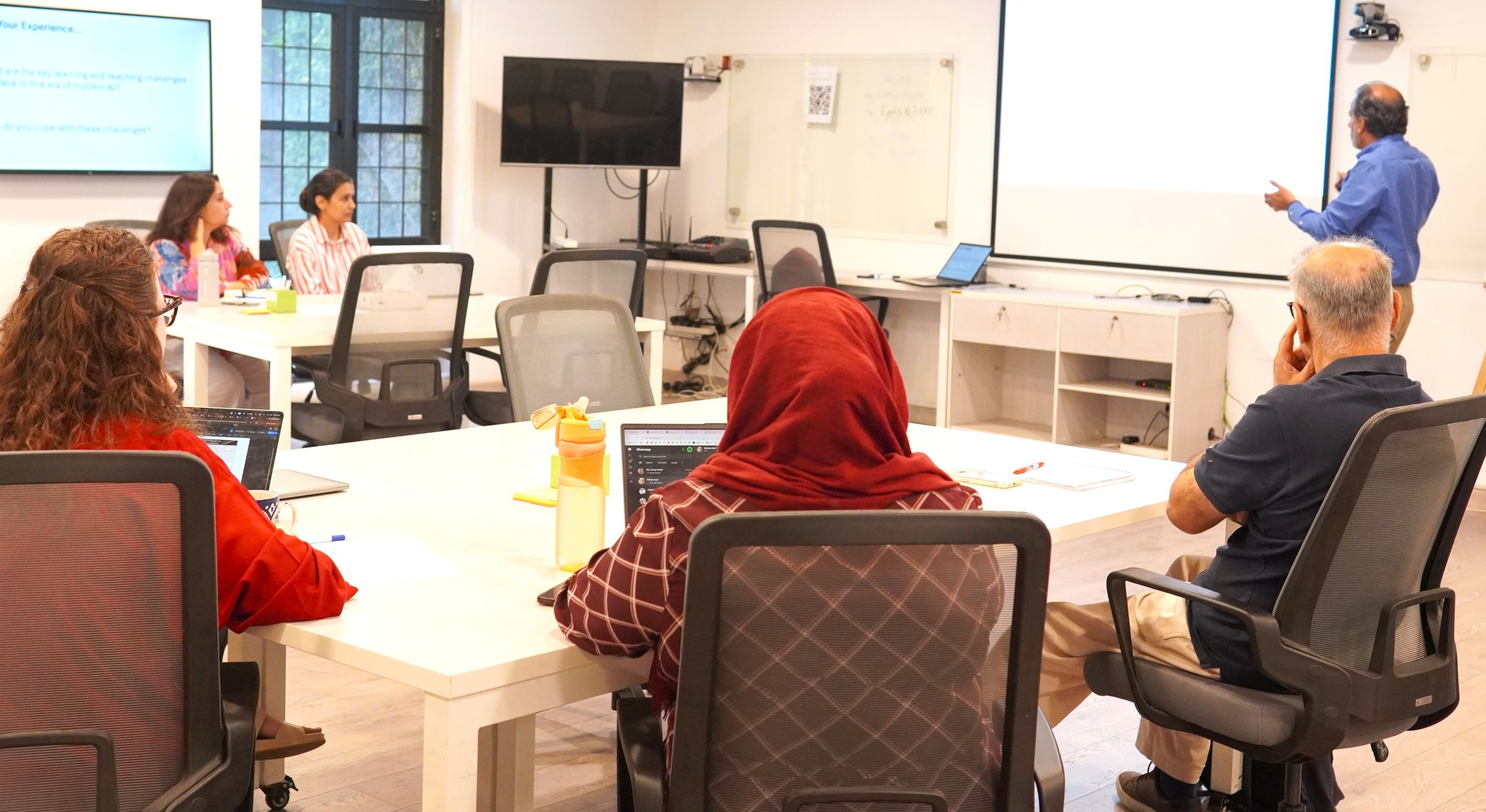
Building on the discussion in Session 3, which explored grading student work and the role of instructor judgment in AI-supported assessment, the fourth session of the AI Teaching Lab shifted attention to a more fundamental question: If AI can complete an assignment, what exactly are we asking students to learn?
Led by Dr. Malik Jahan Khan, Computer Science faculty at LUMS, the session, titled Artificial Intelligence and the Learning Process, invited faculty to reconsider the relationship between AI, cognitive effort, and meaningful learning. The conversation explored how generative AI is changing not only the way students complete academic tasks but also the processes through which they develop understanding, reasoning, and independent judgment.
The Role of Cognitive Effort in Learning
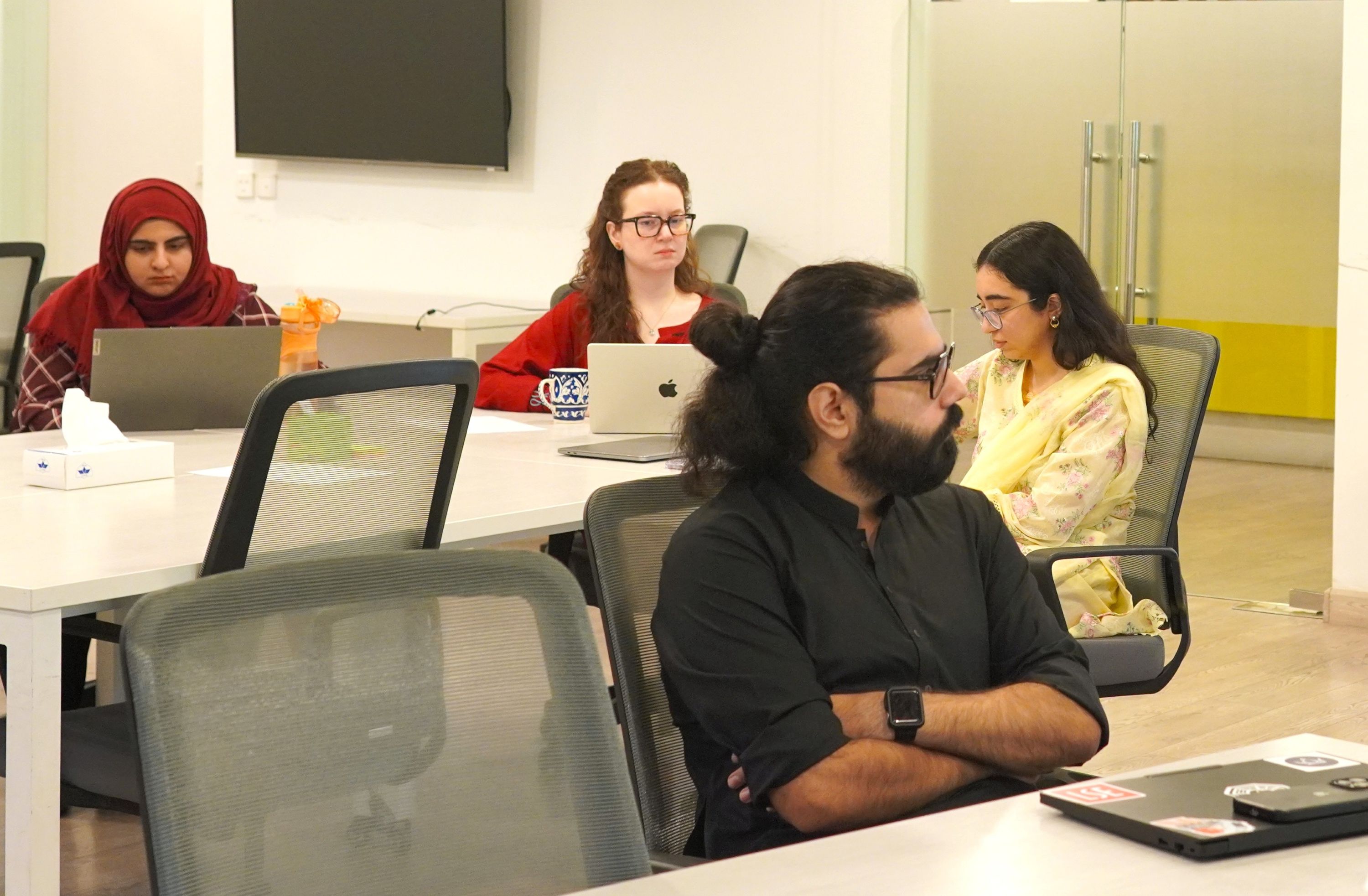
A central theme of the session was that learning requires cognitive effort. Students build understanding by recalling information, practising concepts, reasoning through problems, evaluating alternatives, and developing their own solutions. While AI can support these processes, it can also allow students to bypass the intellectual work that contributes to learning.
Dr. Malik highlighted an important distinction between productive and unnecessary struggle. Not every difficult task contributes to learning, but removing all difficulty may also remove opportunities for students to develop essential cognitive skills. This raised a question for faculty to consider: When does AI genuinely support student understanding, and when does it simply make completing an assignment easier?
The discussion also explored the risks of excessive reliance on AI, including dependency, shallow learning, and what Dr. Malik described as invisible thinking. AI-generated work may appear polished and accurate even when students have not developed a strong understanding of the concepts involved. Consequently, the quality of a student's final submission may no longer provide sufficient evidence of the learning that has taken place.
Student perspectives shared during the session reflected these tensions. Some students described AI as a valuable learning resource, particularly when concepts were unclear or opportunities to approach instructors and teaching assistants were limited. Others expressed concerns about losing confidence in their own reasoning or becoming dependent on AI to complete tasks. These contrasting experiences highlighted that AI can serve as both a learning aid and a shortcut, depending on how students engage with it.
Rethinking Assessment and AI Literacy

The conversation then turned to assessment and its role in encouraging meaningful learning. Dr. Malik emphasised that assessment should extend beyond assigning grades and measuring achievement. It should also encourage students to engage with course concepts, demonstrate understanding, and develop the ability to apply knowledge independently.
Faculty were encouraged to reflect on what their assignments are intended to achieve and whether existing assessment approaches make student thinking visible. The discussion highlighted the importance of moving beyond lower-order cognitive tasks, such as recalling facts, towards activities involving logical reasoning, problem-solving, constructing arguments, and applying knowledge to real-world situations.
Drawing on his teaching experience, Dr. Malik also shared an intervention used in his courses: an open handwritten notes policy. This example encouraged faculty to consider how changes in assessment conditions might influence student preparation, engagement with course material, and the demonstration of understanding.
Another important theme was the need to broaden how universities approach AI literacy. Dr. Malik emphasised that AI literacy is more than prompt engineering. It involves understanding the capabilities and limitations of AI, verifying its outputs, exercising judgment about when to use it, recognising ethical responsibilities, and preserving human agency. Students must learn not only how to use AI effectively but also when to question it, when to rely on their own reasoning, and which decisions must remain theirs.
Bringing these ideas together, Dr. Malik introduced five guiding principles for university education in the AI era. The first, protect foundational learning, emphasised that students must develop essential knowledge and understanding before relying on AI to perform cognitive tasks. The second, empower students through AI literacy, focused on equipping students to use AI critically, question its outputs, recognise its limitations, and make informed decisions. The third, design meaningful learning experiences, encouraged faculty to integrate AI only where it adds genuine educational value. The fourth, reveal evidence of learning, highlighted the importance of assessments that make students' reasoning, decision-making, and intellectual effort visible rather than evaluating only the final output. Finally, preserve human agency reinforced that students must remain responsible for their own thinking, judgments, and decisions, even when using AI.
Together, these principles offered faculty a practical framework for integrating AI into teaching while ensuring that student learning, rather than task completion, remains the central priority.
Keeping Learning at the Centre
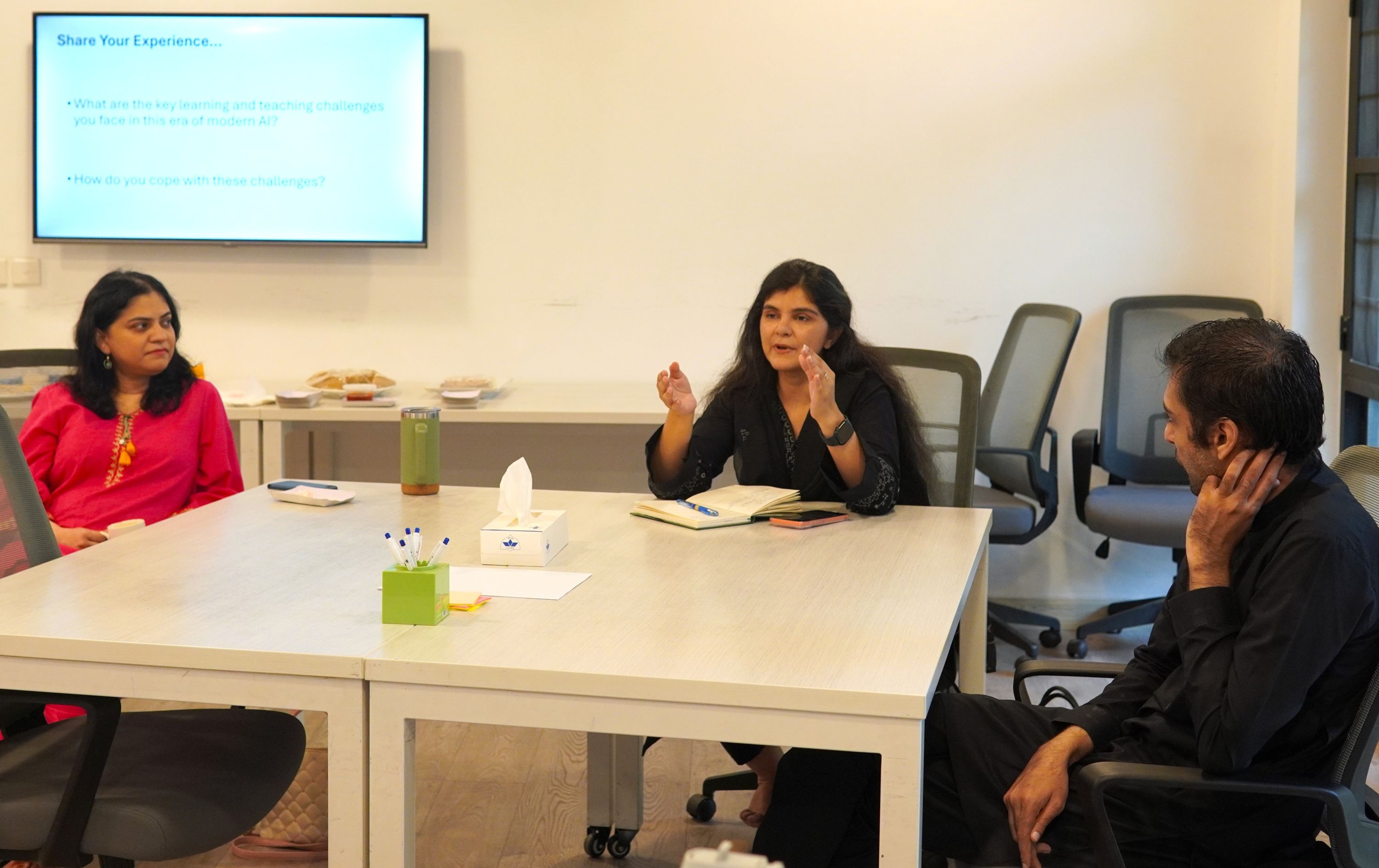
The session reinforced that the purpose of university education extends beyond producing correct answers or polished assignments. It is about developing knowledge, critical thinking, problem-solving abilities, and the confidence to exercise independent judgment.
As AI becomes increasingly capable of completing academic tasks, educators face an important challenge: ensuring that students remain actively involved in the thinking and learning those tasks are intended to promote
Session 4 continued the AI Teaching Lab's broader conversation about the future of teaching and learning, encouraging faculty to move beyond the question of whether students should use AI and instead consider how AI can be used without replacing the cognitive effort essential to meaningful learning.
Through the AI Teaching Lab, LUMS Learning Institute continues to bring faculty together to share experiences, reflect on emerging challenges, and explore how teaching and assessment can evolve in response to AI, while ensuring that meaningful student learning remains the priority.
Read about the previous sessions of the AI Teaching Lab:
Session 1 | Session 2 | Session 3
Join the Next AI Teaching Lab Session. Register here.

Connect


