



Belonging in Practice: Designing Student Leadership Across the LUMS Campus
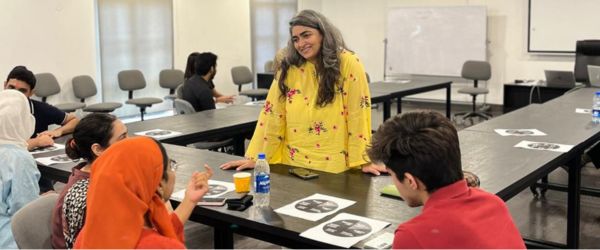
In the past two years, Floor Advisors at LUMS have been among the first points of contact for students navigating distress, conflict, and adjustment challenges in residential life. Preparing them well is not a logistical task — it is a pedagogical one.
Every August, a new cohort of students arrives at LUMS and begins the transition into residential life. For many, this is the first time they are living away from home, negotiating shared spaces, and building a sense of community from scratch. The quality of that experience depends, in large part, on the Floor Advisors (FAs) who live alongside them.
FAs are peer leaders, students supporting students. They are the first to notice when a floormate is struggling, the first to step in when conflict arises, and the first to direct someone to help. Despite the weight of these responsibilities, preparation for the role had traditionally been limited: mostly procedural briefings and static materials that did not reflect the relational and often unpredictable nature of the work.
At the LUMS Learning Institute (LLI), we saw an opportunity to change that. Working in close collaboration with the Office of Student Affairs (OSA) – Residential Life, we redesigned FA training as a six-day, experience-led programme, one that treats residential life not as a backdrop to learning, but as a site of it.
Reframing the Challenge
The FA role is complex in ways that a briefing document cannot capture. Responding to a student in distress, mediating a conflict between roommates, or recognizing early signs of mental health difficulty all require judgment, empathy, and the ability to read a situation in real time, capabilities that develop through practice and reflection, not through reading a policy.
This insight draws on Donald Schön's concept of the reflective practitioner, the idea that professional competence is built not just through formal knowledge, but through cycles of action and reflection in context. Our aim was to design a training programme that cultivated exactly this kind of practitioner.
The central question shifted: not 'what do FAs need to know?' but 'what do FAs need to be able to do, and how do we create the conditions for them to practice it?'
An LLI Approach: Learning Across the Campus
LLI's work is grounded in the view that student development happens across an institution, in classrooms, yes, but also in residence halls, sports facilities, counselling rooms, and co-curricular spaces. The FA training was designed to reflect this.
The programme was developed through collaboration with Residential Life, Counselling and Psychological Services (CAPS), and Sports, Wellness & Recreation (SWR). Each unit contributed substantively to the design, not as consultees, but as co-designers. This mirrors what scholar Celia Whitchurch calls "third space" practice: the productive work that happens when professionals move across institutional boundaries rather than operating within them.
The answer shaped a programme that is specifically LUMS in its design, grounded in the residential context our students actually live in, the support systems that exist on this campus, and the challenges FAs have encountered in previous years.
Designing for Experiential Learning
The training programme was conceptualized, designed, and facilitated by Eilya Mohsin, Head of Educational Development & Strategic Initiatives at LLI, whose work focuses on integrating experiential learning and student development across institutional contexts.
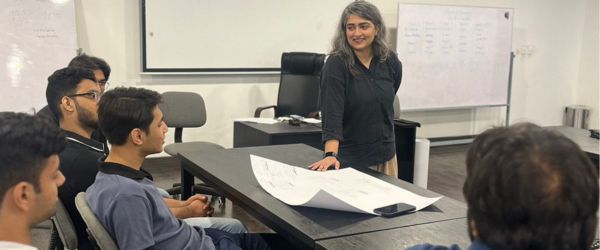
The programme was structured using the BOPPPS framework (developed by the Instructional Skills Workshop Network) to ensure clear learning objectives and alignment of activities. Experiential learning theory, developed by David Kolb, and grounded in John Dewey’s foundational work on education as experience, shapes the backbone of the programme: participants encounter a situation, engage with it, reflect on what happened, and draw generalizable insight before moving on.
The BOPPPS framework is itself embedded within the Instructional Skills Design (ISD) training , a foundational programme at LLI, making its incorporation here a natural and deliberate choice: the same principles that shape how LLI develops educators were applied directly to how LLI developed the FAs.
A key design principle was to begin with experience rather than instruction. In each session, participants engaged with realistic scenarios and activities before being introduced to frameworks or tools. This meant that when a concept arrived, it had somewhere to land, connected to something participants had already felt or struggled with.
Over the six days, participants:
- Explored role boundaries through case-based discussions drawn from real FA situations at LUMS
- Mapped the campus support ecosystem through a place-based activity that took them physically to CAPS, SWR, and other services
- Engaged in structured reflection on identity, inclusion, and how their own backgrounds shape the way they show up as leaders
- Worked through community-level challenges using problem-mapping and collaborative planning activities
Cognitive load was managed deliberately. Rather than front-loading participants with procedures and policy, key tools and systems were introduced in a phased, need-to-know sequence.
Iterative and Collaborative Design
The programme was not designed in isolation. Multiple planning sessions brought together Residential Life staff, LLI, and student perspectives. Past FA cohort feedback, recurring challenge patterns identified, and direct input from current FAs all shaped the design decisions.
For example, earlier iterations of FA training had identified a gap in how FAs recognized and responded to signs of student distress.
This iterative process reflects a broader commitment to designing learning as an evolving cycle rather than a fixed intervention, one that improves each year as new evidence comes in.
Embedding Evaluation and Feedback
Evaluation was built into the programme from the outset, informed by the Kirkpatrick Model, which assesses training effectiveness across four levels: reaction, learning, behaviour, and results.
- Immediate post-session feedback captures how participants experienced the training and what they felt they learned
- A mid-cycle review (already completed) assessed how FAs are applying their learning in practice during the current academic year. Initial findings indicate stronger confidence in identifying distress and clearer knowledge of escalation pathways, areas that previous cohorts had rated as underprepared
- End-of-year indicators, including student well-being data and floor community engagement, will provide insight into longer-term impact
A final review at the end of the academic year will consolidate these findings and directly inform the next iteration of the programme.
A Shift in Pedagogical Practice
Perhaps the most significant aspect of this programme is what it signals institutionally: that the preparation of student leaders is a pedagogical investment, not an administrative formality.
When residential life is treated as a site of intentional learning, when the people who shape peer experience on campus are themselves given the conditions to develop judgment, empathy, and reflective practice, the effects ripple outward. Students feel it in the quality of their communities.
This is the direction LLI is committed to: not learning that happens despite institutional silos but learning that is designed across them.
The FA programme is one piece of a larger effort at LUMS to ensure that student development is supported not just in lecture halls, but across the full range of experiences that shape who our students become.
Project Team
This initiative was implemented in close collaboration with the Office of Student Affairs (OSA) – Residential Life team:
- Shahbaz Khan — Project Manager, OSA
- Haris Rajput — Student Liaison Associate
- Fizza Ayub — Programme Development Associate
- Saad Hasnain — Systems Integration Specialist
References
Dewey, J. (1938). Experience and education. Macmillan. [Foundational text; see also later scholarship building on Dewey in higher education contexts.]
Kolb, D. A. (1984). Experiential learning: Experience as the source of learning and development. Prentice Hall.
Kirkpatrick, D. L., & Kirkpatrick, J. D. (2006). Evaluating training programs: The four levels (3rd ed.). Berrett-Koehler.
Pattison, P., & Russell, D. (2006). Instructional skills workshop handbook. ISW Network.
Schön, D. A. (1983). The reflective practitioner: How professionals think in action. Basic Books.
Whitchurch, C. (2008). Shifting identities and blurring boundaries: The emergence of third space professionals in UK higher education. Higher Education Quarterly, 62(4), 377–396.