



Artificial Intelligence Teaching Lab
Taeching and Learning in the Age of AI
Location: LUMS Learning Institute- Ground Floor Academic Block (Out-Gate Entrance; Opposite OSA)
Workshop Description
The AI Teaching Lab (AITL) is a monthly, faculty-focused initiative by the LUMS Learning Institute designed to put learning first and support thoughtful and responsible engagement with artificial intelligence in higher education.
As generative AI increasingly shapes how knowledge is produced, assessed, and learned, AITL creates a space for LUMS faculty to step back and ask a central question: how do we protect and strengthen learning in an age where AI seems to easily mimic it?
Rather than focusing on tools alone, the series invites faculty to think critically about teaching. Through discussions, classroom examples, and shared reflections, participants explore questions around assessment, academic integrity, and responsible AI use, including when and how AI should be disclosed in student work.
Each session is led by LUMS faculty and grounded in real classroom practice. Faculty are encouraged to share what they have tried, what has worked, and what has not. The aim is to create a space for honest reflection, experimentation, and peer learning across disciplines.
The AI Teaching Lab is ultimately about keeping student thinking, effort, and understanding at the centre of our courses, while navigating the opportunities and challenges that AI presents.
Advanced Preparation: None
Time Commitment: Last Friday of Every Month at 10:00 or 10:30 AM
Dates: 24 April | 22 May | 28 August
Format: In person
Workshop delivery
Sessions are interactive and discussion-based. They may include short inputs, small group discussions, and opportunities to reflect on and adapt one’s own courses.
The focus is not on mastering tools, but on examining how AI is changing teaching and learning, and how faculty can respond in ways that keep learning meaningful and rigorous.
Registration
To Register for the course, please Click Here!
Cancellations
If you need to cancel your participation in this workshop, please Email: lli@lums.edu.pk Contact No: 0313 (LUMSLLI) 5867554 as soon as possible as there are people on the waitlist who wish to attend the session.
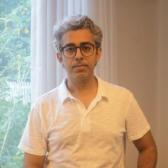
Bilal Tanweer is a writer and translator. His debut novel, The Scatter Here Is Too Great, was published in five territories (Random House - India, HarperCollins - United States, Jonathan Cape - UK, Editions Stock - France, Carl Hanser Verlag - Germany), and was translated into French and German. The novel was awarded the Shakti Bhatt First Book Prize and was a finalist for the DSC Prize for South Asian Literature and the Chautauqua Prize. It garnered positive reviews in publications including The New York Times, The Guardian, Times Literary Supplement, and Neue Zürcher Zeitung.

Summaiya Zaidi received a PhD in legal history in 2023 from Osgoode Hall Law School at York University, and an LL.M. from SOAS in 2012. She currently teaches law at her alma mater LUMS in Lahore where she acquired her BA/LL.B. degree in 2009. She views law from a multidisciplinary perspective looking at the historical and sociological context that creates, defines, and shapes it. With experience in research and litigation, Summaiya works with marginalized communities that have limited access to law and legal fora, adding their voices to conversations from which they are otherwise excluded.

Dr. Malik Jahan did his PhD in Computer Science from Syed Babar Ali School of Science and Engineering at Lahore University of Management Sciences (LUMS) in 2012. His PhD research work was focused on achieving self-managing behavior in autonomic systems using approximate case-based reasoning. His research interests include autonomic computing, machine learning and applications of machine learning in agriculture and livestock. He has won research grants from Ignite and DAAD as PI and co-PI on technology interventions for rural uplift. He is currently working as a visiting associate professor of computer science on the full time basis at LUMS.
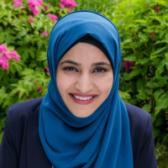
Dr. Farah Nadeem, a Fulbright scholar, earned her PhD in Computer Science and Electrical Engineering from the University of Washington. She previously completed her Bachelor’s and Master’s degrees in Electrical, Electronics, and Communications Engineering from NUST and NUCES, respectively. Dr. Nadeem has also served as the Monitoring & Evaluation Lead at the School Education Department, Punjab, and is currently a consultant at the Education Global Practice with the World Bank.


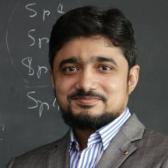
Dr. Agha Ali Raza is a Tenured Associate Professor of Computer Science at LUMS, a Mahbub ul Haq Research Center (MHRC) fellow, and a consortium member leading the MS in Artificial Intelligence program at LUMS. He is the founding director of the Center for Speech and Language Technologies (CSaLT) and the principal investigator of the Crime Investigation and Prevention Lab (CIPL) under the National Centers for Big Data and Cloud Computing (NCBC) initiative of the government of Pakistan. Dr. Raza is a Fulbright scholar who received his Ph.D. in Computer Science with a specialization in Language Technologies (AI for Speech and Natural Language Processing) from Carnegie Mellon University, Pittsburgh, USA.

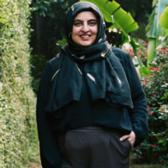
Rehana is an MPhil graduate in Education Leadership and Management from LUMS, driven by a passion to enhance learning experiences across diverse educational settings in Pakistan. With over 7 years of experience, she has honed her expertise in integrating artificial intelligence (AI) within the educational sector, primarily focusing on its transformative potential in assessment, pedagogy, social media, and ethical use.