



Certificate in AI-Enabled Teaching, Assessment, and Academic Leadership
Overview
Generative AI is transforming teaching, assessment, and leadership across higher education. Many universities have responded with plagiarism detection policies and restrictions on AI tools. While these measures may be necessary, they are not sufficient.
What institutions need is a coherent institutional response:
- Faculty who understands what AI can and cannot do
- Assessment systems that remain valid in an AI-present environment
- Leadership capable of developing and implementing practical, adaptive AI policies
The Certificate in AI-Enabled Teaching, Assessment, and Academic Leadership is designed for professionals who must make high-stakes decisions about AI within their institutions and need both the conceptual grounding and the practical skills to make those decisions well.
The program combines strategy, policy, pedagogy, assessment design, and implementation planning to help institutions move beyond reactive responses and build sustainable AI capability.
Why this Certificate Program?
This certificate is not a generic AI tools workshop. It is an institutional leadership and implementation program focused on the realities of higher education.
Participants will learn how to:
- Redesign assessments that remain defensible in the age of AI.
- Use AI to enhance feedback and academic workflows.
- Interpret learning analytics to support student success.
- Draft institutionally appropriate AI-use policies.
- Create implementation plans that can be executed within departments and universities.
The goal is to help institutions develop the capacity to adapt confidently and responsibly rather than simply react to technological change.
Who Should Attend?
The program is intended for:
- Faculty Members
- Academic Managers
- Heads of Department
- Deans
- Public & Private Universities
- Business Schools
- Engineering Universities
- Medical & Health Professions Universities
- Higher Education Bodies
- Donor-funded Higher Education Reform Programs
Program Structure
| Component | Format | Duration |
|---|---|---|
| Immersive Sessions | Hybrid | Day 1: 7 hours Day 2: 7 hours |
| Weekly Session | Hybrid | 3 hours per session, once a week (5 PM - 8 PM) |
| Capstone / Implementation Planning | Hybrid | 7 Hours |
Schedule
Program Start: 7 November 2026
Orientation: Hybrid-Two intensive days at the LUMS campus (7 hours each)
Weekly Sessions: Hybrid-Once a week (5 PM - 8 PM)
Program End: December 2026.
The hybrid format allows participants from across Pakistan and internationally to participate while still benefiting from an intensive on-campus learning experience.
Learning Outcomes
By the end of the program, participants will be able to:
| 1 | Distinguish between AI literacy and AI competency, and identify where each is required in their professional role. |
| 2 | Redesign course assessments to remain valid, equitable, and academically defensible in an AI-present environment. |
| 3 | Apply AI tools to support feedback, curriculum review and faculty workflows responsibly. |
| 4 | Use learning analytics to support student success and early intervention. |
| 5 | Draft an institutional AI-use policy aligned with governance and academic context. |
| 6 | Develop a department-level implementation plan with actionable next steps. |
Program Fee
Standard Fee
PKR 150,000
Regular registration fee.
Early Bird Fee
PKR 120,000
Apply before 30-09-2026
Group Discount
10%
For institutions nominating five or more participants.
Note: Early Bird and Group Discount offers cannot be combined.
Participant Requirements
Participants are expected to have:
- Personal laptop for all program activities
- Reliable internet connection for online sessions
- Active subscription to ChatGPT or Claude
- Basic familiarity with digital collaboration tools
Laptops and software subscriptions will not be provided by the LUMS Learning Institute.
Pay via Installment
KalPay Taleem offers installment plans for AI-TAL. Sign up to apply for the installment facility now. For any queries, feel free to reach out to us via WhatsApp at 0328 3044414. (Office hours: 9:30 am - 6:00 pm).
Contact Us
For any further information and queries, please contact:
Email: lli@lums.edu.pk
Phone: 0313-LUMSLLI (5867554)
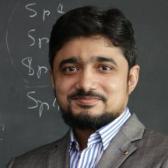
Dr. Raza is a Tenured Associate Professor of Computer Science at LUMS, a Mahbub ul Haq Research Center (MHRC) fellow, and a consortium member leading the MS in Artificial Intelligence program at LUMS. He is the founding director of the Center for Speech and Language Technologies (CSaLT) and the principal investigator of the Crime Investigation and Prevention Lab (CIPL) under the National Centers for Big Data and Cloud Computing (NCBC) initiative of the government of Pakistan.

Dr. Nadeem, a Fulbright scholar, earned her PhD in Computer Science and Electrical Engineering from the University of Washington. She previously completed her Bachelor’s and Master’s degrees in Electrical, Electronics, and Communications Engineering from NUST and NUCES, respectively. Dr. Nadeem has also served as the Monitoring & Evaluation Lead at the School Education Department, Punjab, and is currently a consultant at the Education Global Practice with the World Bank.
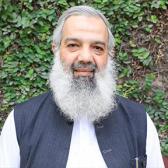
Dr. Tariq M. Jadoon is the Provost & Acting Vice Chancellor at LUMS and has been part of the university since 2001. He holds a PhD in Electrical and Electronics Engineering from the University of Strathclyde, Glasgow, and has held several key leadership roles at LUMS, including Registrar, Associate Dean, Department Chair, and Vice Provost.
His work spans technology, engineering, IoT, high-speed networks, and electric mobility, and he currently directs LUMS’ USAID-funded e-Mobility R&D Lab, focused on strengthening Pakistan’s capabilities in electric vehicle technology.
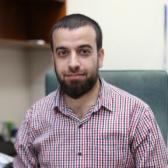
Director, LUMS Learning Institute
Dr. Alizai is an Associate Professor of Computer Science at LUMS. He brings years of experience as a faculty, researcher, software engineer, and technical lead both in industrial and academic settings. He has authored a book and book-chapters, and published more than 60 scientific papers while abroad and indigenously from Pakistan, several of them in top-flight ACM/IEEE journals and conferences (CoNEXT, SenSys, IPSN, BuildSys, LCTES, EWSN, TOSN, TECS, CCR).